Although you may consider factors such as budget and time-to-launch, you also need to think about your long-term goals. It is in your best interest to use a laboratory that is up-to-date with methods, training and equipment; a laboratory which will conduct testing that is scientifically sound, compliant and stands-up to FDA scrutiny.
The ethics of any organization you do business with is important, but it is essential in a testing laboratory. When visiting or auditing your laboratory, you should be allowed complete access to your study, the area in which testing is conducted, the equipment that is used, and all testing and equipment calibration records. If you’re preparing to launch a product that makes claims regarding the Sunscreen Protection Factor (SPF) value, here’s what you need to know.
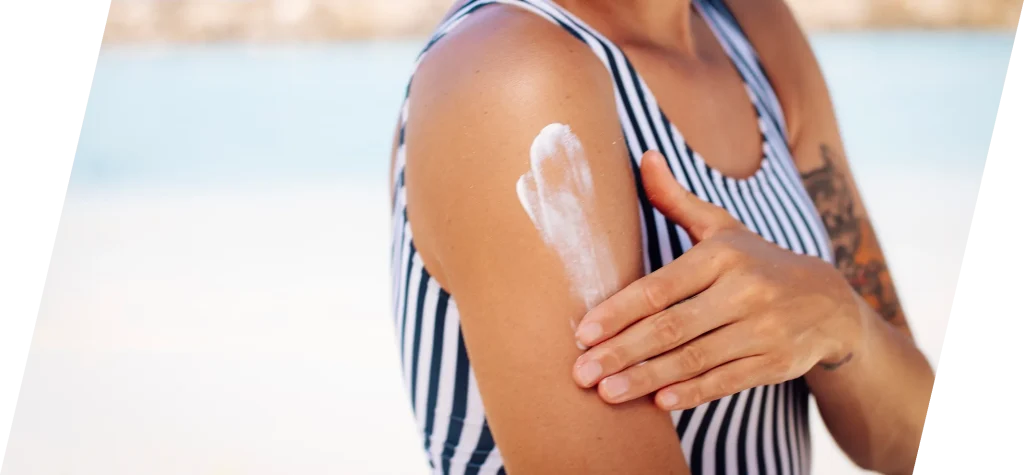
A sunscreen product’s SPF value will be based on the amount of time or energy, that it takes for one’s skin to redden when exposed to UV radiation, whilst protected by a sunscreen product vs. no protection. Basically, if a product has an SPF of 30, this means that if it takes 10 minutes for unprotected skin to experience redness, it will take 30 times that, or 300 minutes to redden, when wearing the SPF 30 product as directed.
Calculations made from clinical trial data will determine the SPF of your product. It is upon this calculated SPF that you can base your labeling claims.
In the early 1990s, “in vitro” testing was developed to evaluate UVA protection. Ultraviolet-A is known to cause tanning, skin cancer, and premature skin aging in the long-term. Based on the guidelines set by the worldwide regulatory authorities, an in vitro critical wavelength method is suitable for measuring a product’s Broad Spectrum Protection.
If you’re planning on launching a new sunscreen product, you’ll require a lab that can efficiently and ethically perform all related SPF tests.
As of June 2011, OTC (over-the-counter) sunscreen products must undergo specific labeling and effectiveness tests. This method continues today as the Final Administrative Order (OTC000006) Over-the-Counter Monograph M020: Sunscreen Drug Products for Over-the-Counter Human Use. This includes products that contain specific “allowed” active ingredients, such as avobenzone, meradimate, octocrylene, padimate and others.
Now adopted in nearly 60 countries, supportable claims include SPF number and sunscreen efficacy. This excludes the USA but includes countries such as Australia, Canada, China, Chile, New Zealand, India, Russia and various other global countries.
In compliance with EU requirements, this method focuses on UVAPF — Ultraviolet A Protection Factor. UVA has been linked to photoaging and skin cancer. When a product protects against both UVA and UVB radiation, this qualifies as a Broad Spectrum product.
To make this claim, a water-resistance test must be performed. This will demonstrate that a product’s SPF protection is retained for 40 to 80 minutes after being immersed in water.
This measures a product’s absorbance of UV radiation across both the UVB and UVA spectrum.
Solar simulators create artificial sunlight which provide UV illumination that mimics natural sunlight. The purpose of this equipment is to provide a controlled and uniform UV exposure under which your sunscreen product will be tested. All solar simulators must be evaluated on a regular basis to ensure that their UV output is consistent with applicable regulations.
Identify where you will be selling your product, as markets differ. For example, test requirements will differ between the USA and Australia.
Determine the SPF value of your product based on your intended claim.
When claiming Water Resistance, this will typically be based on 40- or 80-minute protection.
Next, you’ll want to consider Broad-Spectrum claim requirements. In most markets, an in vitro test is acceptable. Once again, FDA requirements differ in comparison to ISO.
For sunscreen products sold within the US, you are required to determine the expiration date of the product in each of its marketed container systems prior to launch.
As a recommendation, the earlier you include a testing laboratory in your planning, the less likely there will be problems in meeting your launch date.
Depending on the claims you’d like to make, and the jurisdiction in which you plan to launch your product, different testing procedures and recognized protocols will be required.
Some of the main questions you’ll want to ask the SPF testing lab include:
Don’t be shy about asking tough questions. Request a tour of the testing facility and an equipment list. Future success of your product will be determined by these extremely critical initial tests. You cannot entrust your SPF testing to a laboratory that is unethical or fails to meet current FDA requirements for GMP/GCP testing laboratories. FDA has recently invalidated SPF test results that have been generated by an unethical SPF testing lab, and other labs which fail to meet the basic requirements of GMP/GCP and Data Integrity.
Plan wisely and conduct due diligence when selecting a testing laboratory. The success of your product may depend upon it.