Clinical Bioinstrumentation

  • FDA Registration FEI# 1000151293 as a GMP/GLP/GCP Drug Establishment and Cosmetic Facility.
  • DEA Registration# RC0199744 (Analytical Lab) | Schedule I-V license | Remember, Schedules I-II require DEA Form 222 | Registration# RC0171568 (Researcher)
  • US EPA/NJ DEP Registration# NJD982726648
  • ISO/IEC 17025:2017 Accreditation# 80071

Clinical bioinstrumentation delivers objective, quantitative measurement of how skin responds to cosmetic and personal care products.

Specialized instruments measure numerous physical parameters before and after product use. These include surface topography, elasticity, firmness, hydration, barrier function, sebum, and color/complexion. The result is numerical data that can be tracked over time, compared across formulations, and evaluated with regard to the intricacies of skin composition.

Instrumental data supports product development, efficacy assessment, and claim substantiation.

You may be screening prototype formulations or preparing to launch a finished product with performance claims. Either way, bioinstrumentation provides measurable evidence of what your product does on and to skin. CPT℠ Labs pairs a wide range of state-of-the-art bioinstrumentation with current testing methodologies to evaluate the parameters most relevant to your formulation and your claims.

Skin Surface Imaging and 3D Analysis

Anti-aging and complexion claims depend on precise measurement of changes at the skin’s surface. CPT℠ Labs employs complementary imaging systems to capture and quantify those changes.

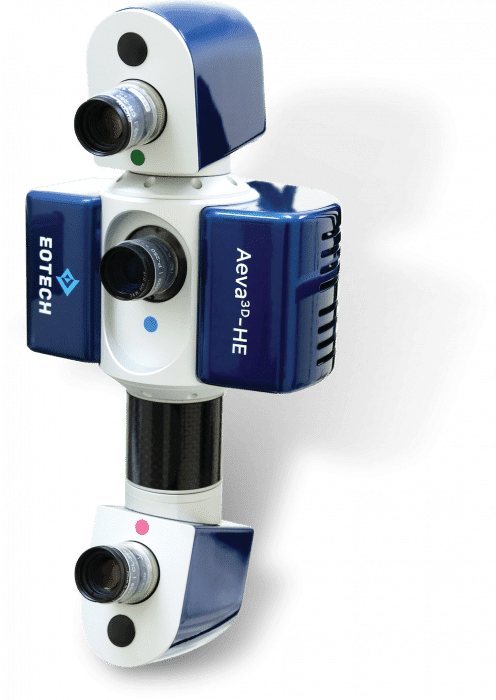
Aeva-3D-HE with the Visio 4-D Bench

The Aeva-3D-HE uses fringe projection and stereovision, also known as active stereometry, to combine a wide field of view with high resolution. That flexibility supports a broad range of study designs, from wrinkle reduction to body reshaping. It delivers quantitative efficacy assessments for cosmetics, spa and dermatological procedures and other topical formulas.

Learn More ➝

PRIMOS™ 3-D Image Analysis

PRIMOS™ image analysis produces high-quality 3-D imagery of skin texture and surface topography. This data informs product development and supports anti-aging claims such as “reduces the appearance of fine lines and wrinkles.”

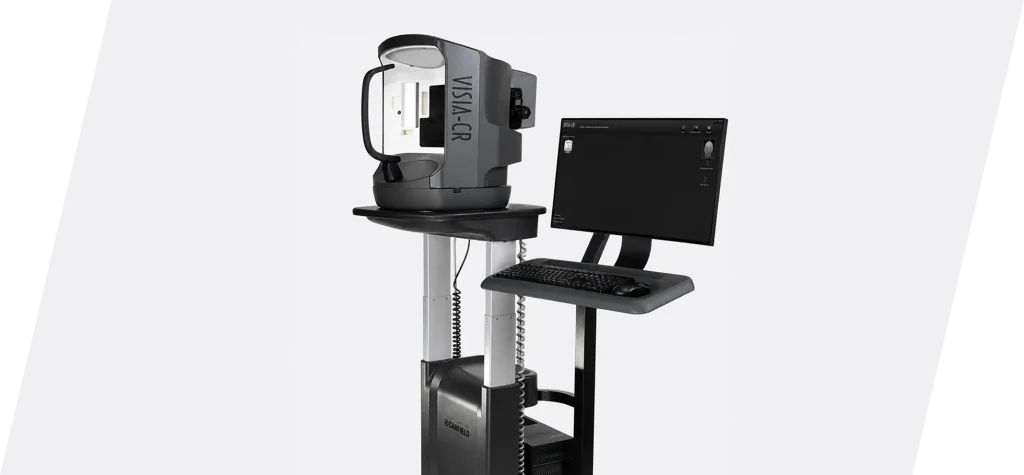
Visia-CR™ Photo System with PRIMOS™

The Visia-CR™ captures images under multiple lighting conditions and adds PRIMOS™ 3-D capture for combined complexion and surface topography analysis. Computerized data analysis can then support claims such as “lightens the appearance of dark spots” and “reduces the appearance of dark circles, fine lines, and wrinkles around the eyes.”

Visia-CR™ Lighting Modes and Analyses

Each lighting mode isolates a different set of skin features, from surface texture and wrinkles to sub-surface pigmentation and porphyrins. This allows each parameter to be visualized and analyzed on its own.

Skin Hydration and Barrier Function

Moisturization Testing

CPT℠ Labs measures changes in skin moisturization using specialized instruments, including the Corneometer and MoistureMeterSC. This testing is essential for evaluating the efficacy of moisturizers and other skin care products and for substantiating moisturization claims.

Transepidermal Water Loss (TEWL) Testing

Our clinical bioinstrumentation staff use a Vapometer to measure TEWL, a key indicator of skin barrier function. TEWL data shows whether a product breaks down, repairs, or enhances the skin’s natural barrier. That information is relevant to both safety and efficacy.

D-Squame™ Skin Dryness and Exfoliation Evaluation

The D-Squame™ technique provides detailed insight into skin dryness and exfoliation. It guides product development to address these concerns and supports skin moisturization and exfoliation claims.

Skin Mechanics and Sebum

Viscoelasticity Testing

Changes in the skin’s viscoelastic properties directly measure product performance. Using instruments such as the Cutometer and Elastometer, CPT℠ Labs quantifies elasticity and firmness after use of cosmetic formulations. This data supports both formulation development and claim substantiation.

Sebum Testing

Measuring changes in sebum on the skin supports sebum production and reduction claims. It also provides valuable direction when formulating for specific skin types, including acne-prone skin.

Hair Evaluation with HairMetrix

HairMetrix uses the VisioMed D200 for global image capture with real-time analysis. Its AI-driven software analyzes unclipped trichoscopy images for general hair counts. With clipped-hair imaging, it determines anagen/telogen ratio and produces more accurate hair count data. Compare mode places baseline and follow-up images side by side to demonstrate progress over the course of treatment.

Claims Supported by Bioinstrumentation Testing

The right instrument depends on the claim you intend to make. The table below shows how common claim types align with the methods CPT℠ Labs offers.

Please note, any and all claims and the substantiation of those claims are the responsibility of the study sponsor.

Claim Category

Example Claim Language

Method(s)

Fine lines & wrinkles

“Reduces the appearance of fine lines and wrinkles”

PRIMOS™, Visia-CR™, Aeva-3D-HE

Complexion & dark spots

“Lightens the appearance of dark spots”

Visia-CR™

Eye area

“Reduces the appearance of dark circles”

Visia-CR™ with PRIMOS™

Firmness & elasticity

“Visibly firmer skin”

Cutometer, Elastometer

Moisturization

“Hydrates skin for up to [X] hours”

Corneometer, MoistureMeterSC, D-Squame™

Barrier function

“Supports the skin’s natural barrier”

Vapometer (TEWL)

Dryness & exfoliation

“Reduces visible flaking”

D-Squame™

Oil control

“Reduces surface oil”

Sebum measurement

Body contouring

“Visibly reshapes”

Aeva-3D-HE with Visio 4-D Bench

Hair density

“Visibly fuller hair”

HairMetrix

Claim language matters as much as the data behind it.

Under U.S. law, whether a product is a cosmetic or a drug depends on its intended use, and manufacturers sometimes violate the law by marketing a cosmetic with a drug claim. Manufacturers can establish intended use through claims on product labeling, in advertising, online, or in other promotional materials. Separately, the FTC requires advertisers to have a reasonable basis for objective claims before disseminating them. For express substantiation claims such as “tests prove” or “studies show,” the Commission expects at least the advertised level of support. CPT℠ Labs can help you design a study that matches the claim you intend to make. Our consulting team can also review claim language for the U.S. market.

Why Choose CPT℠ Labs

CPT℠ Labs pairs a comprehensive bioinstrumentation suite with an experienced clinical team to generate data you can stand behind.

Our Clinical Bioinstrumentation Laboratory is equipped with a wide range of state-of-the-art instruments. It is operated by a well-seasoned staff using the most current testing methodologies. We are ready to test your cosmetic formulations in support of product development, efficacy determination, and claim substantiation.

Contact us to discuss your next clinical bioinstrumentation study.

Get a Quote

Don't Miss Our Upcoming Webinar

Understanding Phototoxicity and Photoallergy Testing in Product Safety Determination

Speaker: Michael Lutz
Date: October 21 at 1:00PM ET