
Moisturization and Rheology
- FDA Registration FEI# 1000151293 as a GMP/GLP/GCP Drug Establishment and Cosmetic Facility.
- DEA Registration# RC0199744 (Analytical Lab) | Schedule I-V license | Remember, Schedules I-II require DEA Form 222 | Registration# RC0171568 (Researcher)
- US EPA/NJ DEP Registration# NJD982726648
- ISO/IEC 17025:2017 Accreditation# 80071
Moisturization and Hydration Claims Testing
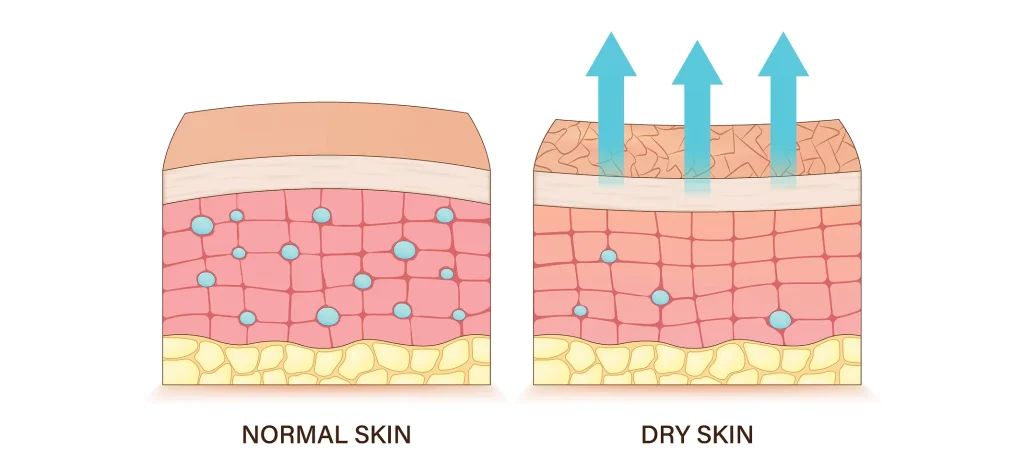
The use of an effective daily moisturizer is critical for healthy skin. This is especially true in northern climates where people are exposed to extremely dry air for long periods of time. Without proper hydration, skin becomes rough and flaky, and with time will become inflamed.
CPT is ready to help companies measure the moisturization effectiveness of topical products.
It all begins with the ingredients. In order to hydrate skin, a product needs to contain an effective amount of either a humectant (e.g. glycerin) and/or an occlusive (e.g. petrolatum). The former hydrates by pulling in water from the air and the surrounding tissues and occlusives hydrate by inhibiting evaporation through the skin.
Once you have a formula to test, we work with you to determine the best testing method and instruments required. The method of choice will consider product claims you want to make and what we can expect based on the formula:
High Level of Humectants
Many daily moisturizers on the market fall into this category. For these products, we will recommend use of a hydration probe such as a Corneometer® or the MoistureMeter SC. Both are very sensitive devices that measure the change in hydration level as assessed by measuring the electrical properties of the skin surface.

High Level of Occlusives
Often seen in hand and body products, especially for areas that tend to get rough with daily activities (e.g. palms/soles, joints), these products hydrate the skin by impeding the natural evaporation process (i.e. transpiration). For these products we recommend using a Vapometer® or similar device that measures the rate of transpiration.
Combination of Humectants and Occlusives
These are products that should provide improvements in both hydration and barrier integrity, and we would expect the hydration effect to last for several hours in some cases. With these products, the recommendation is to take hydration readings at successive timepoints after product application to demonstrate substantivity.
Measuring Long-Term Hydration
If you have a product that you believe provides multiple days of hydration, we recommend conducting a ‘leg regression’ test. This is the original technique that was used before hydration probes became available. This test method involves saturating the skin of the lower legs for several days with the product, followed by a regression phase where the skin returns to its’ original dry state. Performance is measured by clinical graders measuring dryness, flaking/scaling, and fissures/cracking. The success of the moisturizers is measured in the delay of this return to dryness.

Rheology
Humans do not have the ability to self-perceive the hydration state of their skin, but most people equate “moisturization” in terms of emolliency. A typical consumer will tell you that their skin is “moisturized” if it feels softer and more supple following product use.
For self-perceived “moisturization” claims, we recommend a questionnaire study where panelists are asked questions related to skin feel and optical properties (i.e. clarity).
If you want to use an instrument to precisely measure the firmness and or ‘squishiness’ of skin, we recommend using a device such as a Cutometer®. Human skin has both elastic and viscoelastic properties, and we can measure those by ‘stressing’ skin and measuring how much force it takes to deform skin and how readily skin rebounds. This chart is an example of a typical stress/strain curve that can be used for many different claims, such as firmness, elasticity, and skin fatigue.
