
With the development of reliable in chemico/in vitro assays, manufacturers and formulators are now able to determine whether or not a substance is a skin sensitizing agent without the need for animal testing. Each of the available assays recapitulates some element of the adverse outcome pathway (AOP) associated with a skin sensitization response in humans. Using an integrated testing strategy that incorporates these approaches for identifying skin sensitization hazard risk (as outlined by the Globally Harmonized System of Classification and Labelling of Chemicals) ensures regulatory compliance as well as consumer safety and satisfaction.
In humans, multiple exposures to a skin sensitizer may cause activation of the immune system’s dendritic cells. Activation of these cells in the body is evidenced by changes in surface molecules on the dendritic cells. This event is regarded as the third key event in the skin sensitization adverse outcome pathway and is modeled in the h-CLAT in vitro assay. The h-CLAT measures the expression of specific cell surface markers associated with maturation of dendritic cells (i.e., CD86, CD54) in a human monocytic leukemia cell line (THP-1 cells).
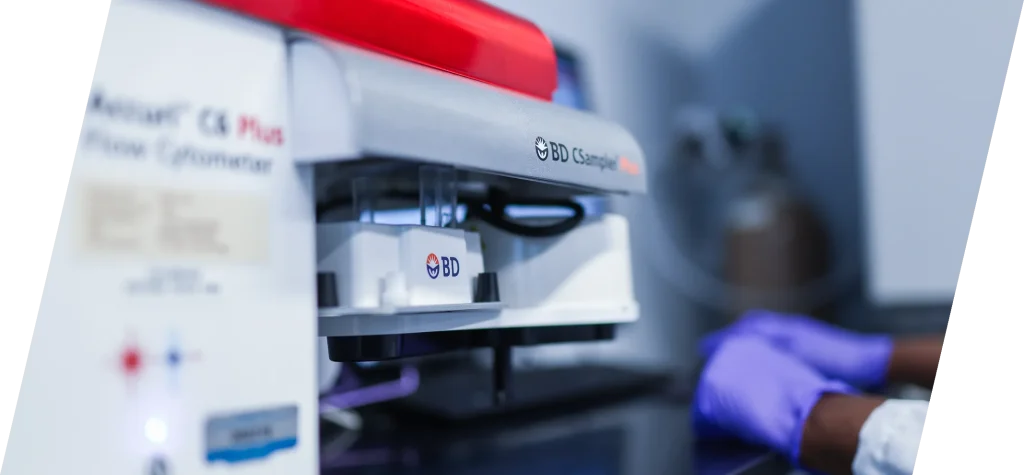
Cells are exposed to the test material for 24 hours before cell surface marker expression is evaluated by staining the markers with fluorochrome-tagged antibodies and quantifying positively-stained populations using flow cytometry. Sensitizers are identified by comparing the relative fluorescence intensity of cell populations exposed to the materials versus cells that were exposed to solvent/vehicle controls.
The h-CLAT must be used in conjunction with additional assays to confidently determine a substance’s safety and skin sensitization potential as some materials (such as metabolically-driven sensitizers) may not be suitable for this assay.
CPT℠ uses state-of-the-art testing laboratories, including labs that specialize in Analytical, Clinical, and In Vitro Toxicology testing. All of our testing facilities are at your disposal for evaluating skin sensitization potential.
In our highly experienced and specialized departments, we test a wide range of cosmetic and personal care products. Our experts offer our clients guidance on the best testing strategies to ensure consumer safety and satisfaction as well as regulatory compliance.